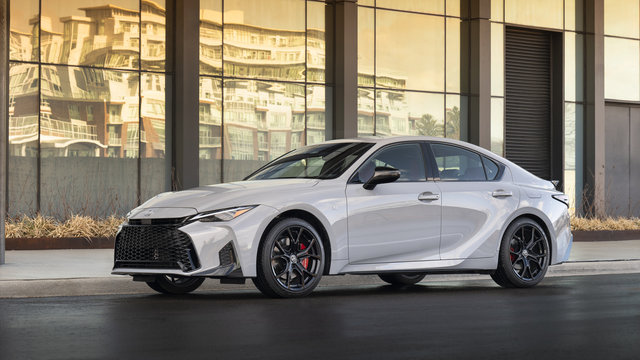
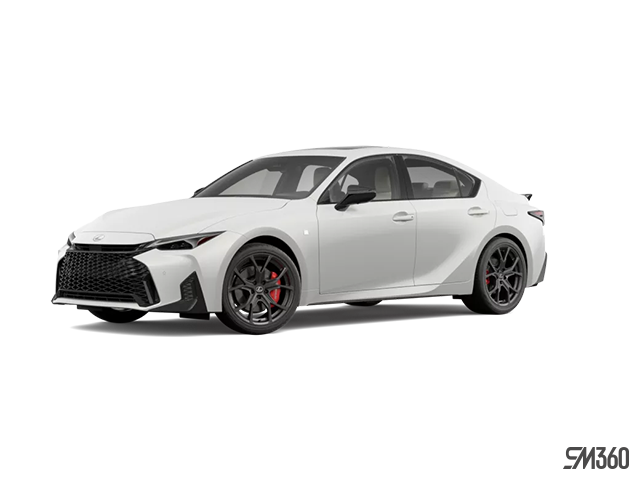
A compact sport sedan lives or dies on how it feels in a corner, not on a spec sheet. If you’re cross-shopping the 2026 Lexus IS in New Brunswick, the question isn’t whether it has enough horsepower. It’s whether the steering, chassis, and suspension actually talk to each other when the pavement turns rough or the road tightens up.
That’s the part a brochure can’t show you, so let’s break down how it actually works.
What Gives the 2026 IS Its Planted Feel
Every 2026 IS starts with the same mechanical foundation: a 3.5-litre naturally aspirated V6 making 311 horsepower and 280 lb-ft of torque, paired with a six-speed automatic transmission and all-wheel drive. There’s no turbo drama here, and that’s the point.
The engine is tuned for smooth, linear response rather than a peak number to brag about. Power builds predictably as you press the pedal, which matters more than a big spec when you’re threading a two-lane road.
Around that powertrain sits a rigid chassis designed to cut down on unwanted noise, shake, and vibration. A stiffer structure means the suspension and steering aren’t fighting body flex, so their inputs reach the road more directly.
How Steering, Suspension, and AWD Work Together
For 2026, Lexus recalibrated the Electric Power Steering system alongside the suspension tuning, aiming for a steering feel that stays linear and consistent whether you’re on a straight highway stretch or working through a series of corners. The goal was a steering wheel that returns to centre smoothly, not one that feels artificial or over-assisted.
That consistency shows up in three moments every driver recognizes: turning into a corner, making a small mid-corner correction, and holding a straight line at speed. Lexus engineers tuned the steering and suspension response to feel the same across all three, so the car doesn’t surprise you when conditions change.
The suspension itself uses refined components engineered to reduce unsprung weight, which helps the wheels track the road surface more closely instead of bouncing over it. Paired with the rigid chassis, this keeps the sedan settled on imperfect pavement without turning every bump into a jolt through the cabin.
All-wheel drive is standard across every 2026 IS grade, delivering power to the pavement through the Lexus dynamic torque AWD system. It works with the steering and suspension tuning rather than as a separate system, helping the car put its torque down predictably instead of asking the front or rear tires to do all the work.
Why This Matters for Everyday Driving
A sport sedan that only feels good on a closed track isn’t much use on New Brunswick roads, where surfaces vary and weather changes fast. The combination of chassis stiffness, suspension refinement, and standard AWD is built to hold its composure on rough or twisty pavement, not just a smooth test loop.
That matters most in the moments you don’t plan for: a mid-corner surface change, a sudden lane correction, or accelerating out of a turn onto uneven asphalt. Because the steering and suspension are tuned to behave the same way in each of those situations, the car stays predictable when it counts.
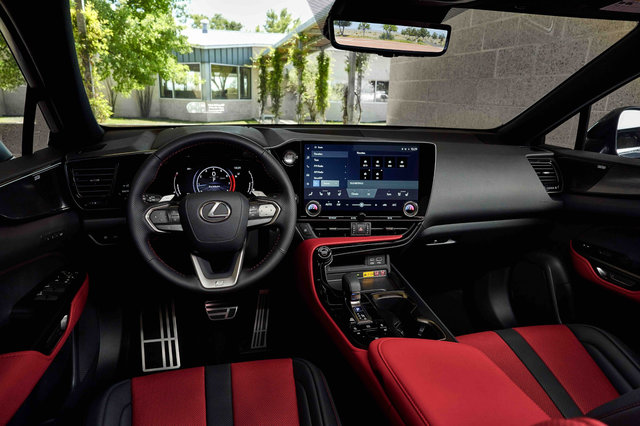
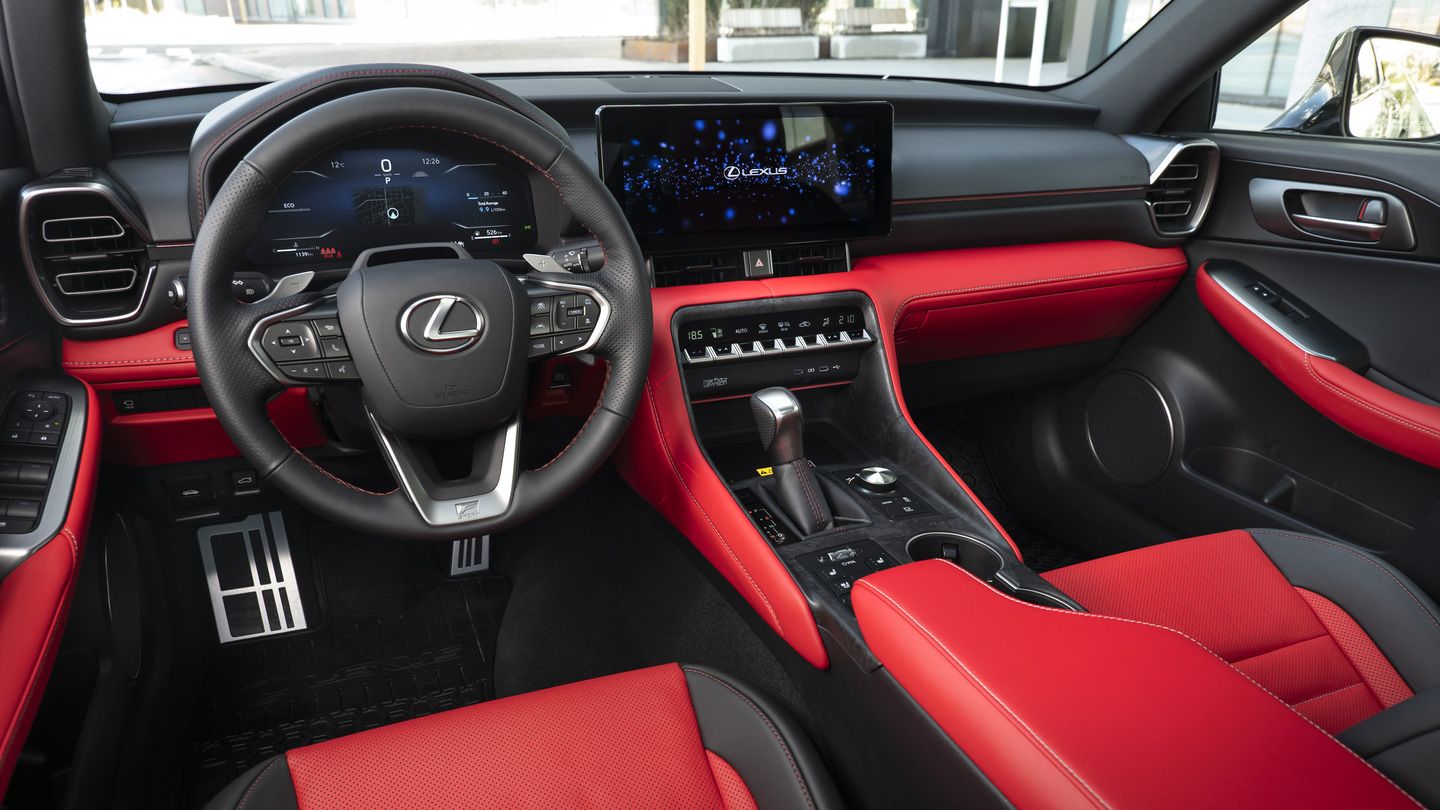
The cockpit reinforces that same sense of control. A 12.3-inch digital instrument cluster sits directly in the driver’s line of sight, and a 12.3-inch touchscreen running Lexus Interface keeps navigation and connectivity within easy reach. Four USB-C ports and a wireless charging pad round out the cabin without cluttering the controls a driver actually needs mid-corner.
Every 2026 IS also comes standard with Lexus Safety System+ 3.0, a suite of active safety technology that supports awareness in traffic without the driver needing to think about it. That standard layer of assistance is part of the confidence story just as much as the chassis is.
Grade by Grade: Building on the Same Foundation
Every 2026 IS grade shares the same 3.5L V6, six-speed automatic, and AWD system described above. What changes as you move up the lineup is the hardware layered on top of that foundation, plus the driver-assistance features available for tighter manoeuvres and heavier traffic.
|
Grade
|
Suspension / Handling
|
Wheels
|
Audio
|
Notable Additions
|
|
F SPORT DESIGN
|
Standard tuned suspension
|
19-inch F SPORT alloy wheels
|
10-speaker Lexus Display Audio
|
Heated/power front seats, heated steering wheel, power moon roof
|
|
F SPORT 2
|
Standard tuned suspension
|
19-inch F SPORT alloy wheels
|
10-speaker Lexus Display Audio
|
Panoramic View Monitor, Intuitive Parking Assist with Auto Braking, ventilated front seats
|
|
F SPORT 3
|
Adaptive Variable Suspension, Sport+ Drive Mode Select
|
19-inch forged BBS wheels
|
17-speaker Mark Levinson audio
|
Traffic Jam Assist, Lane Change Assist, Front Cross Traffic Alert
|
The jump to F SPORT 2 is mostly about parking and low-speed confidence: the Panoramic View Monitor and Intuitive Parking Assist with Auto Braking help in tight spaces, not on the open road. The bigger mechanical step comes at F SPORT 3, where Adaptive Variable Suspension and Sport+ Drive Mode Select actively adjust damping and response, giving the driver more direct control over how the chassis behaves rather than relying on one fixed tune.
Who Gets the Most Out of This System
A driver who mostly wants a comfortable, well-equipped sedan for daily commuting will find everything they need in the F SPORT DESIGN or F SPORT 2, where the same chassis, steering calibration, and AWD system already deliver the planted, predictable feel the IS is built around.
A driver who wants to feel every layer of that tuning, especially on a road with real corners, gets the most from the F SPORT 3’s Adaptive Variable Suspension and Sport+ mode, which let the car adjust its character rather than settle for one setting.
Either way, the steering feel, chassis rigidity, and AWD traction described here aren’t upgrades reserved for the top grade. They’re the starting point for every 2026 IS on the road.
Feel the 2026 Lexus IS for Yourself
The 2026 Lexus IS pairs a 311-horsepower V6, standard AWD, and a chassis tuned for linear, predictable steering feel across every grade. The details that separate the grades come down to suspension hardware and driver-assistance features, not the core driving experience.
Visit Lexus of Saint John in Saint John to get behind the wheel and feel how the steering, suspension, and AWD system work together on New Brunswick roads. Book a test drive with our team to compare the F SPORT grades in person.