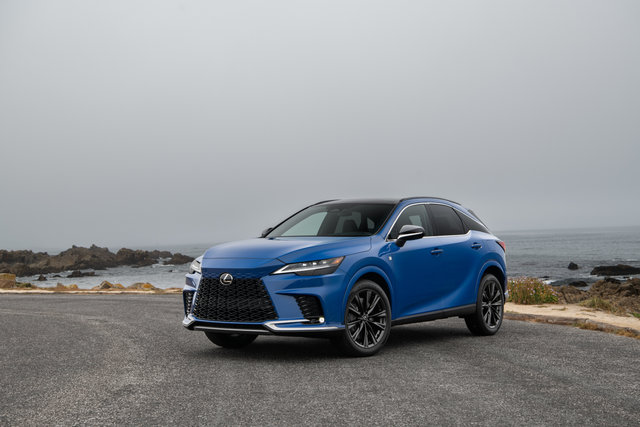
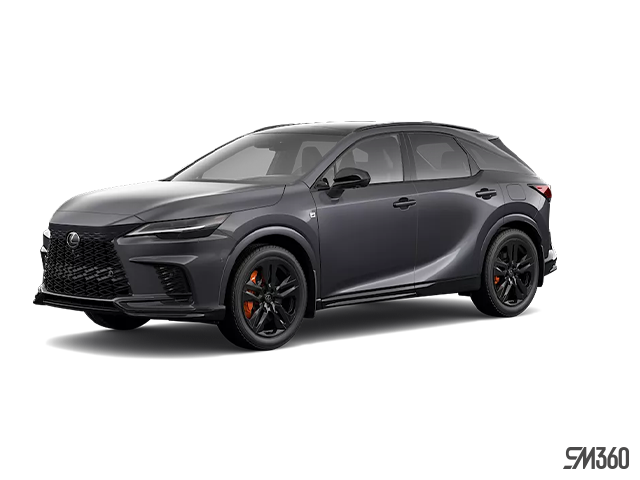
A commute across town looks different in December than it does in July, and it looks different again if your week includes grocery runs, weekend drives to the coast, and the occasional highway stretch. The 2026 Lexus RX comes in four powertrains, and each one handles that mix a little differently.
This isn’t a full trim-by-trim buyer’s guide. It’s a look at how RX efficiency actually shows up in daily New Brunswick driving, so you can figure out which powertrain fits your routine before you set foot in a showroom.
What the RX Efficiency Story Actually Covers
The 2026 RX lineup includes four distinct powertrains: a traditional gasoline engine, a standard hybrid-electric system, a plug-in hybrid, and a performance-leaning hybrid. All four use all-wheel drive, which matters for a province with real winters, but they arrive at efficiency in different ways.
The RX 350 uses a 2.4-litre turbocharged four-cylinder making 275 hp and 317 lb-ft of torque through an eight-speed automatic. The RX 350h pairs a 2.5-litre four-cylinder with a hybrid system for 246 system horsepower and 233 lb-ft of torque through an electronically controlled CVT. The RX 500h takes a 2.4-litre turbocharged hybrid setup to 367 system horsepower and 406 lb-ft, run through a six-speed automatic.
The RX 450h+ plug-in hybrid uses a 2.5-litre four-cylinder hybrid system for 304 hp, with an 18.1 kWh battery behind it.
|
Powertrain
|
Output
|
Combined Fuel Economy
|
Notable Trait
|
|
RX 350 (gas)
|
275 hp / 317 lb-ft
|
9.9 L/100km
|
Straightforward, no charging or hybrid behaviour to learn
|
|
RX 350h (hybrid)
|
246 hp / 233 lb-ft
|
6.5 L/100km
|
Everyday efficiency benchmark
|
|
RX 500h (hybrid)
|
367 hp / 406 lb-ft
|
8.6 L/100km
|
Stronger acceleration, still more efficient than a conventional large SUV
|
|
RX 450h+ (plug-in hybrid)
|
304 hp
|
60 km electric range
|
Best for short, plug-in-friendly commutes
|
How Each Powertrain Behaves Day to Day
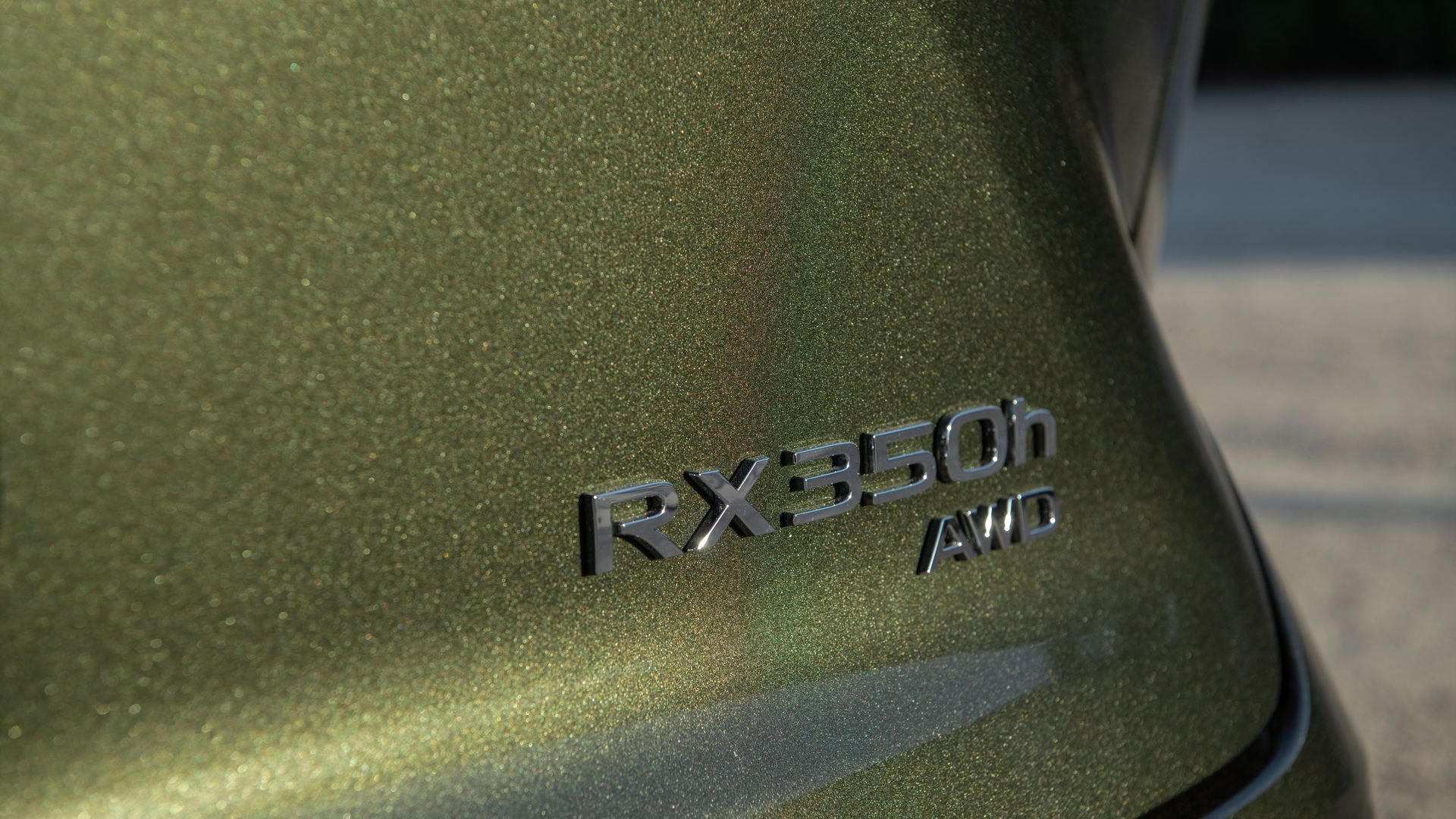
The RX 350h is the hybrid built for the everyday grind: commuting, school pickup, grocery runs, the loop that makes up most weeks. Its 6.5 L/100km combined rating (6.3 city, 6.8 highway) comes from a hybrid system that shifts between electric and gasoline power automatically, with no plugging in required. It carries a standard AWD system and seats five, which covers most family routines without a second vehicle.
The RX 350 keeps things simpler. Its 2.4-litre turbo engine behaves the way a conventional gas SUV always has: fill the 68 L (18 gal.) tank, drive, refill when it’s low. For shoppers who don’t want to think about hybrid behaviour, a battery, or a plug, that predictability is the whole appeal.
The RX 500h shifts the story toward performance. Its 367 system horsepower and 406 lb-ft of torque make it noticeably quicker than the other RX models, yet its 8.6 L/100km combined rating still beats what a conventional large SUV typically returns. It’s the RX for someone who wants stronger acceleration without giving up on efficiency entirely.
The RX 450h+ is the most specialized case. Its 60 km electric-only range and 2.5-hour charge time mean a driver who plugs in overnight and covers a short commute could handle most weekday driving on electricity alone, with the gasoline engine as backup for longer trips.
Why This Matters for Real Ownership
Efficiency on paper is one thing; efficiency in practice depends on your actual patterns. A winter idle to warm up the cabin, a longer highway stretch to visit family, a weekly grocery run: all of it adds up differently depending on which RX you’re driving.
Fuel capacity plays into this too. The RX 350h and RX 500h both carry a 64 L tank, while the RX 450h+ carries a smaller 55 L (15 gal.) tank, since it’s designed to lean on electric range for shorter trips and only needs gasoline as a backup. For a driver without regular charging access, that smaller tank paired with less electric assist changes the math, which is part of why the plug-in hybrid suits a specific kind of commuter rather than every RX buyer.
Cargo space and seating also reduce how often you need a second vehicle or an extra trip. The RX 350h offers 838 L of cargo space behind the rear seats, expanding to 1,308 L behind the front seats, with room for five. That’s enough for most errands and larger hauls without folding seats every week.
Who Benefits Most From Which RX
A driver doing frequent city stop-and-go, with school runs and errands filling most weeks, tends to get the most out of the RX 350h. Its 6.5 L/100km combined rating and standard AWD line up well with that pattern, without asking for any change in routine.
Someone doing more mixed highway driving, or who simply prefers a conventional powertrain with no hybrid system to learn, fits the RX 350. It’s the model for buyers who want the SUV to behave exactly like the gas vehicles they already know.
A driver who can plug in every night, with a commute short enough to stay within 60 km, gets the most from the RX 450h+. That’s a narrower use case than the others, which is why it’s the most specialized efficiency story in the lineup rather than the default recommendation.
And a driver who wants more power under the accelerator, and is willing to trade some of the RX 350h’s efficiency for it, lands on the RX 500h. It still beats a conventional large SUV on fuel economy, just not by as wide a margin as the standard hybrid.
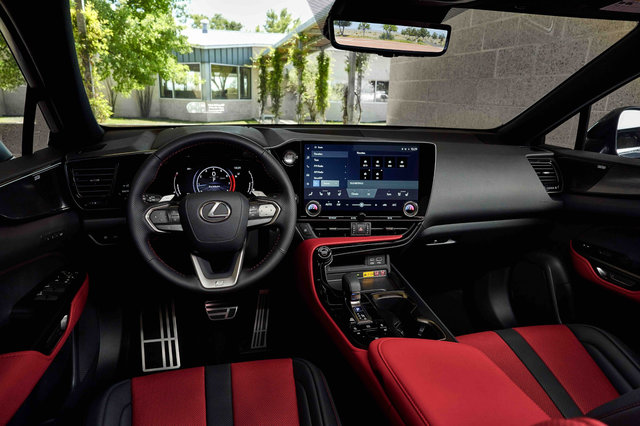
Across all four, visibility, standard driver assistance features, and smooth everyday controls make daily driving easier regardless of which powertrain sits under the hood.
Finding the Right RX for Your Commute
The 2026 RX offers four ways to approach daily efficiency, from a straightforward gasoline engine to a plug-in hybrid built around short commutes. Which one feels most efficient in practice comes down to your commute length, your access to charging, and how much power you want on hand.
Visit Lexus of Saint John to compare the RX 350, RX 350h, RX 500h, and RX 450h+ in person, talk through your commuting needs and charging access, and contact the team for current RX availability.